
- Blog By Sowmya Suryanarayanan and Abhinav Priyam
- June 19, 2026
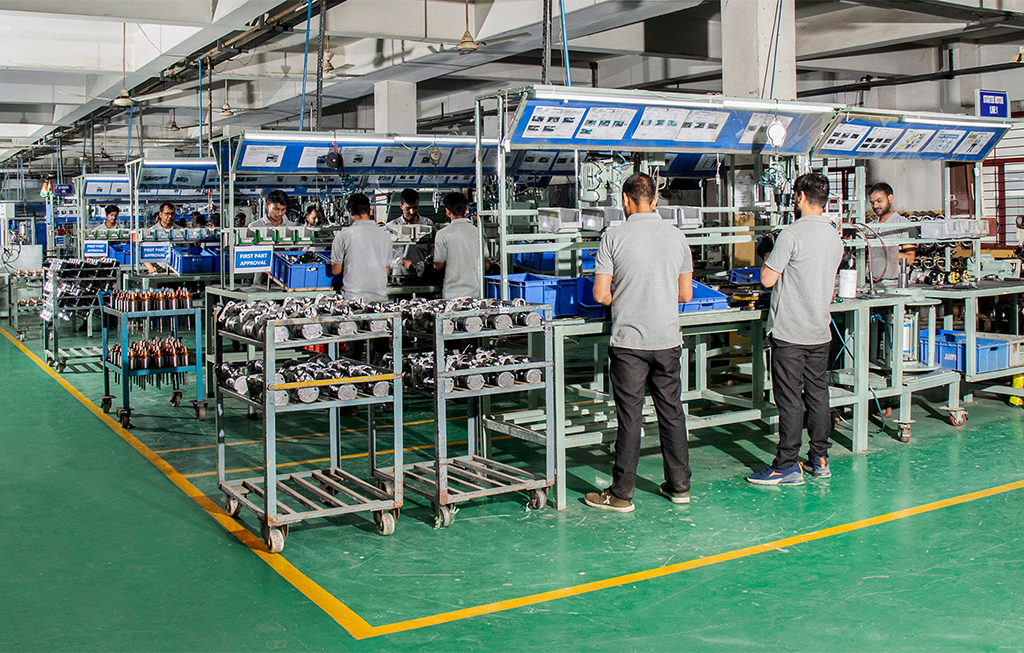
At the Global Supply Chain Support Fund (GSCSF), we see ESG not as a compliance burden but as a driver of value creation. Lower waste means lower costs. Fair wages reduce turnover and improve productivity. Strong governance mitigates risks. Companies that get ESG right perform better.
But implementing this is hardest where it matters most: in the SME segment.
Why SMEs Are the Toughest Frontier
Small and medium-sized enterprises are the backbone of emerging economies, yet they’re hardest to reach with ESG integration. The scale is enormous: India is home to roughly 63 million MSMEs that contribute around 30% of GDP and nearly half of exports, while Africa has an estimated 125 million SMEs that make up about 90% of all businesses and account for up to 40% of GDP in many economies.
Unlike multinationals with dedicated ESG teams and investor pressure, SMEs wrestle with immediate survival, cash flow, delivery timelines, competing margins.
When GSCSF invested in Robust International, an agro-commodity processor sourcing cashews and sesame across Nigeria, Côte d’Ivoire, Burkina Faso and Mozambique with 3,500+ employees, the company had robust operations but lacked formal Environmental and Social Management Systems. AgroStar (INI Farms) operates across 13 Indian states, scaling sustainable agriculture to 13,000 smallholder farmers while maintaining profitability, requiring ESG built from the ground up. Jumps Auto Industries (India) operates in a male-dominated automotive sector where finding roles suited to female workers requires structural rethinking. Privamnuts EPZ (Kenya) manages environmental compliance for macadamia processing while protecting livelihoods for 10,000 smallholder farmers.
You Cannot Manage What You Don’t Measure
Measurement is often the first step in demonstrating the business value of ESG. Across our portfolio companies support 22,519 employees, of whom 11,802 are women (52%). They’ve engaged 13,886 livelihoods through sourcing and value chain partnerships.
Robust’s environmental progress speaks volumes: the group recycled 260.53 metric tonnes of waste and treated 20.51 million litres of wastewater across its facilities. By onshoring cashew processing to origin countries, it is cutting roughly 0.6 kgCO2e per kg of cashew kernels, while lowering operating costs. These results demonstrate that sustainability and business performance can reinforce one another.
The same pattern appears elsewhere. AgroStar increased farmer payouts by 35% (EUR 16.8M to EUR 22.7M) while expanding the farmer base from 9,938 to 13,381. Jumps Auto increased female contractual workers by 88% in a sector where women are often underrepresented. Privamnuts maintains a workforce that is 70% female in a traditionally male-dominated agribusiness sector.
ESG Scoring Tool: Bringing Rigor Through ESG MeasurementTo make ESG measurable and actionable, the GSCSF developed an ESG Scoring Tool to systematize measurement
The tool allows us to:
- Identify baseline performance across environmental, social, and governance dimensions
- Track progress systematically against company-specific ESG theses
- Benchmark against sector and geography peers
- Prioritize Technical Assistance Facility interventions where gaps are greatest
- Demonstrate transparent, standardized accountability
For SMEs, the tool transforms ESG from a broad aspiration into a practical management framework. Rather than asking companies to “be more sustainable,” it helps define measurable targets and track progress over time. Beyond Compliance: Building Lasting Models
In our experience, ESG integration only succeeds when it becomes part of the business model. This requires three things:
Measurement: Data transforms ESG from an optional exercise into an operational priority. When companies can see the benefits of reducing waste, improving workforce diversity, or strengthening governance, ESG becomes a strategic decision.
Capability Building: SMEs lack institutional capacity, not commitment. Our Technical Assistance Facility funds consultants and training to operationalize ESG systems. Only sustained capability-building moves SMEs from compliance to competitive advantage.
Integration into Investment Thesis: ESG must be central to value creation strategy. We identify specific ESG opportunities: supplier efficiency, gender diversity, circular economy modelsand keep these in focus throughout the investment horizon.
The impact is tangible. Across our portfolio, farmer incomes have increased by 20 -30%. Female contractual workers increased 88% in male-dominated sectors. Wastewater recycling, grievance mechanisms, and workplace practices are creating stronger businesses across six countries. .
This is what ESG integration looks like when measured, invested in, and embedded into business logic. The next frontier of sustainable development lies in the SMEs that drive emerging economies. Our role as investors is to provide capital, tools, and proof points to make ESG not just a value creation lever, but an operating standard.