Impact investor Aavishkaar Capital, which manages assets worth nearly $500 million (Rs 4,507 crore), has been investing in India since 2001. The firm is currently deploying capital from its sixth fund, launched in 2022 and closed in late 2023 with a corpus of Rs 1,200 crore, even as it prepares to raise its seventh fund.
Aavishkaar has raised six India-focused equity funds, one offshore equity fund (Aavishkaar Frontier Fund), and one credit fund. Across these eight vehicles, it has raised close to half-a-billion dollars and made around 188 investments.
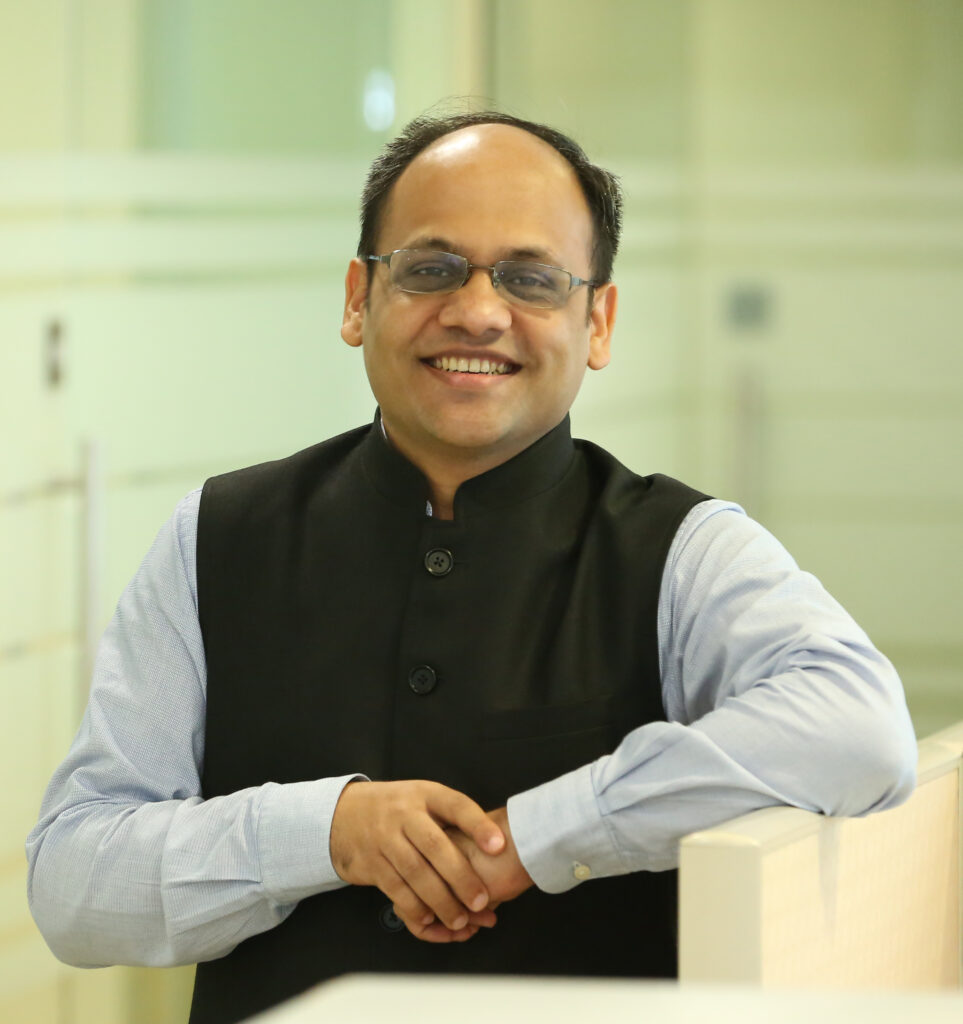
In an interaction with VC Circle, Anurag Agrawal, partner at Aavishkaar Capital, discusses the evolution of the firm’s strategy, its approach to impact investing, and how it balances risk and returns. Edited excerpts:
How has Aavishkaar’s investment strategy evolved across multiple funds?
We started in 2001. The idea was to identify ventures operating in remote geographies, typically tier II or III locations. It took us a long time to raise the initial capital for the fund and we finally managed to close that in 2007. At that time, we were investing at the seed stage.
In terms of sectors, we were among the early investors in the financial inclusion and microfinance space. We even set up a dedicated fund for that in partnership with a Dutch fund called Goodwell.
In the second generation, most of our capital came from DFIs (development finance institutions). Ironically, while we were investing deep into rural India, around 95% of our capital was coming from outside India.
Later, we extended our model beyond India. Some of our key LPs, mostly DFIs, asked if we could replicate the approach in other markets. That led to the Aavishkaar Frontier Fund, launched in 2014, which was about $48 million in size. The idea was to replicate our rural venture model in countries like Bangladesh, Sri Lanka, and Indonesia, where venture ecosystems were still developing. That fund made investments, and we’re still in the process of harvesting those.
After that (around 2017–18), there was a significant strategic shift. We merged our two independent funds, financial services and non-financial services, into a single India-focused vehicle, the Aavishkaar Bharat Fund, which was Rs 800 crore (around $100 million) in size.
We also moved slightly away from very early-stage investments and began focusing more on Series A and B rounds. Naturally, this increased our average ticket size. For instance, our $14 million fund made 23 investments, while the $100 million Bharat Fund made only nine, so the average investment size grew roughly fivefold.
We also began co-investing alongside other investors.
What learnings are shaping your more recent funds?
One key learning was that going solo and very early made it hard to exit within a fund’s 10-year lifecycle: five years of investing and five years of exiting. That’s often too short to exit from seed-stage companies.
We evolved what we call our “relay strategy”. We started identifying winners from earlier funds, companies that were performing well, and reinvesting in them through newer funds to continue their growth journey.
Of course, this introduced potential conflicts of interest, so we established strict conflict management policies such as ensuring different partners led the follow-on rounds and that prior funds didn’t receive preferential exits. We also put strict conflict management policies in place. For example, the same fund couldn’t lead the follow-on round or provide an exit to a previous fund. A different partner would lead the new round to maintain fairness and independence.
Earlier, we primarily backed highly motivated individual entrepreneurs driven by impact. But over time, we realized that scaling within a fund’s time frame requires a strong team from day one.
This approach has guided our recent funds, the fifth and sixth India-focused funds. The sixth fund is a Rs 1,200 crore fund, launched in 2022, and we’re still deploying capital. The fifth fund, the Aavishkaar Bharat Fund, is fully deployed.
Impact investing has grown significantly, but even the definition of what falls under ‘impact’ seems to have expanded. How has your evaluation lens changed over time compared with, say, 10 years ago?
When we started in 2001, the term ‘impact investing’ didn’t even exist. It evolved later through discussions among early practitioners globally.
As an impact investment firm, our financial evaluations are as rigorous as any VC fund, but every investment must also pass a strong impact thesis, demonstrating how it benefits low-income or underserved populations.
So across sectors, we’ve observed that if you can help a company reach scale and establish a new category, it eventually attracts both strategic acquirers and mainstream investors (for example, the microfinance sector in 2005–10, agri-input and export-oriented ventures, and now handlooms).
Our own impact thesis has evolved over a period of time. Initially, we were only looking at the target beneficiary as the low-income population. Over time, we’ve expanded the scope of how we look at impact. Apart from increasing income and reducing vulnerability for the low-income population, we’ve also added a dimension of climate.
In terms of sectors that we cater to, within essential services, climate and the circular economy are two key areas that we’ve been looking at. We also look at gender as a key criteria. Initially, we focused solely on improving incomes and reducing vulnerabilities for low-income communities. Over the years, we’ve broadened that lens to include climate impact and gender inclusion.
We now assess impact along three dimensions: income enhancement, climate sustainability, and gender inclusion. Only when a company meets these impact criteria does it move forward to the financial evaluation stage.
You are writing larger cheques and investing beyond the seed stage. What’s the rationale?
We’ve evolved as the ecosystem has matured. Earlier, we used to invest at the seed stage, but now, with the rise of angel networks and micro-VCs, we generally avoid doing so in the early days. That said, we’ve still carved out a small allocation within our later funds, the fifth and sixth, for emerging sectors.
For example, in our Rs 1,200 crore fund, we invested in a pre-revenue green hydrogen company. We identified that as a space with long-term potential, and since there weren’t many established players, we were comfortable taking an early bet.
Strategically, we now maintain a balanced portfolio, mixing early-stage, high-risk investments (which can deliver alpha) with later-stage, more stable companies that provide liquidity. This ensures we generate returns while maintaining steady capital flows.
Over the years, we’ve realized how important it is for our LPs to receive consistent capital returns. We can’t wait until the 10th year of a fund to start distributions. So from around the sixth year onwards, we start thinking about partial exits and liquidity events.
And impact always has its first filter before we even consider the financial side. Each potential investment goes through our impact screening process, handled by both the deal team and our dedicated Impact & ESG team.
The deal team must first convince internal stakeholders, the management, partners, and investment committee, of a clear and measurable impact thesis.
How does this align with return expectations?
Strong impact alone isn’t enough. We’re managing third-party capital, so we must also deliver financial returns within a defined time frame. Once a company clears the impact filter, we evaluate it financially like any other VC fund would, looking at risk, return, and exit potential.
Typically, for early-stage investments, we expect a higher return threshold to offset greater risk. The technology or model may be new, so if it succeeds, the payoff must justify it. For later-stage investments, like Ujjivan Small Finance Bank, where the business is already scaled and risk is lower, we’re comfortable with more moderate returns, say 3x returns in five years, rather than 10x.
We look at this across the portfolio level, ensuring that each company contributes differently—some bring higher returns, others bring stability or early liquidity. At the fund level, we also monitor exposure by sector, stage, and liquidity profile to maintain a balanced and diversified portfolio.
What IRR do you typically target at fund level?
An investor in an AIF would typically expect at least 20% or more from such funds to justify the additional risk and illiquidity.
At an individual company level, because not every portfolio company performs equally, some do exceptionally well, while others may only break even or fail, the target return per company needs to be higher, often in the 25% range. That’s to ensure the overall fund still achieves its return targets after accounting for underperformers.
At the fund level, it’s around 15% IRR. But when you look at it in dollar terms, there’s also the factor of currency depreciation to consider, since most of our investments are in India. That impacts the effective dollar return for global LPs.
We have both domestic and international fund structures. Our recent funds, the fifth and sixth, are AIF Category II funds registered with SEBI, domiciled in India. The earlier funds were Mauritius-based structures.
Currently, about 50% of our capital comes from domestic investors and the other 50% from international LPs, who typically invest through feeder fund structures that channel money into the India-domiciled fund.
So the return expectation differs slightly. Indian investors look at INR-denominated returns, while overseas LPs evaluate performance in USD terms.
Overall, for an early- to growth-stage impact fund like ours, a 15–20% fund-level IRR is generally considered a healthy outcome.